How it works
Mini Rugby Semplice turns the scores a head coach records after training into a squad picture, training groups, a split of training time and a season plan.
The four steps
Four steps, in order. Each one only happens once the one before it has.
-
The club administrator sets up the squads
One squad per training group, with its register (a first name and up to three letters of the surname, nothing more), the coaches invited, one head coach named.
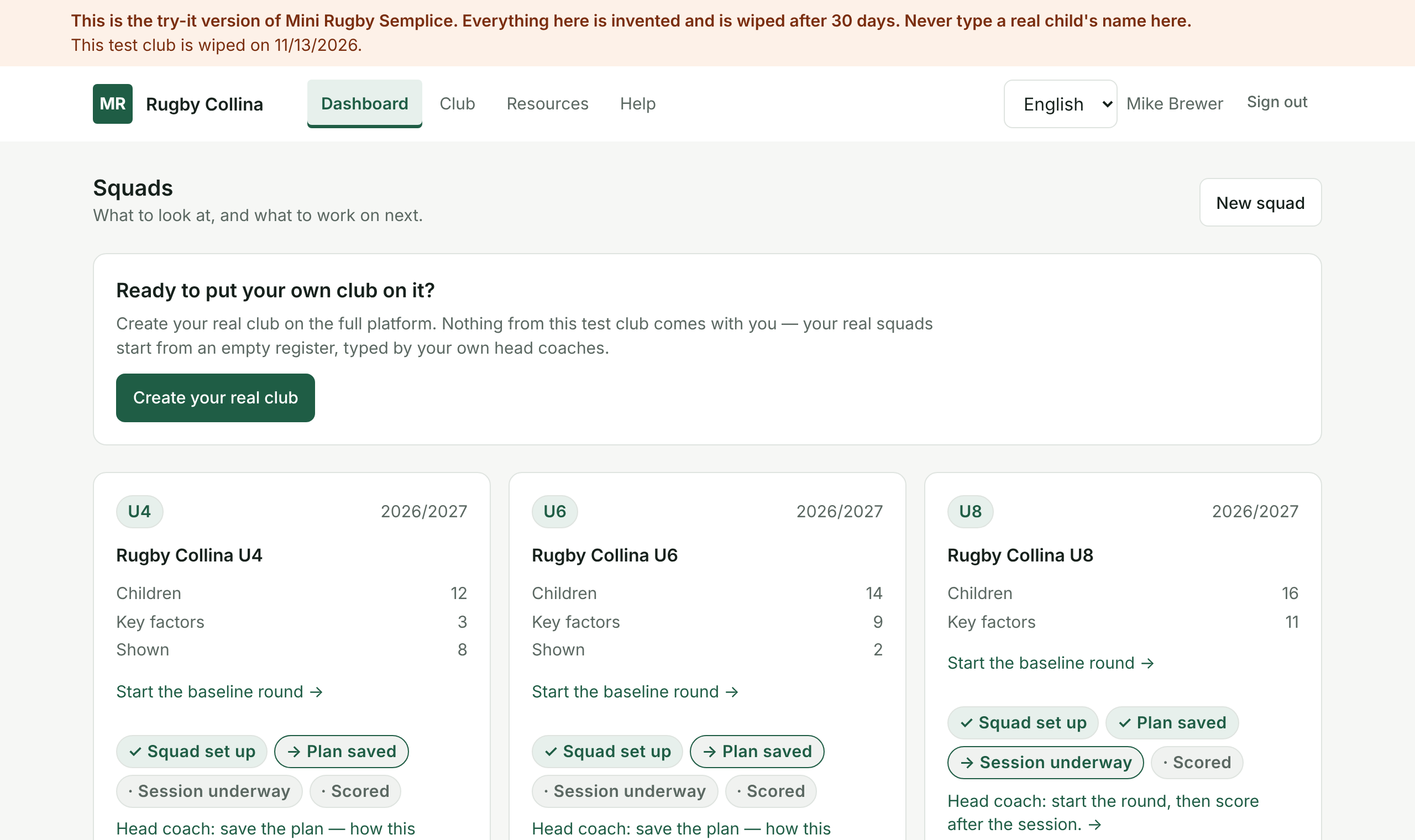
The dashboard: the four-step checklist on every squad card. -
The head coach saves the plan
Sessions a week, session length, block length, and the first block. Until the plan is saved the squad has no session sheet, no scoring and no picture.
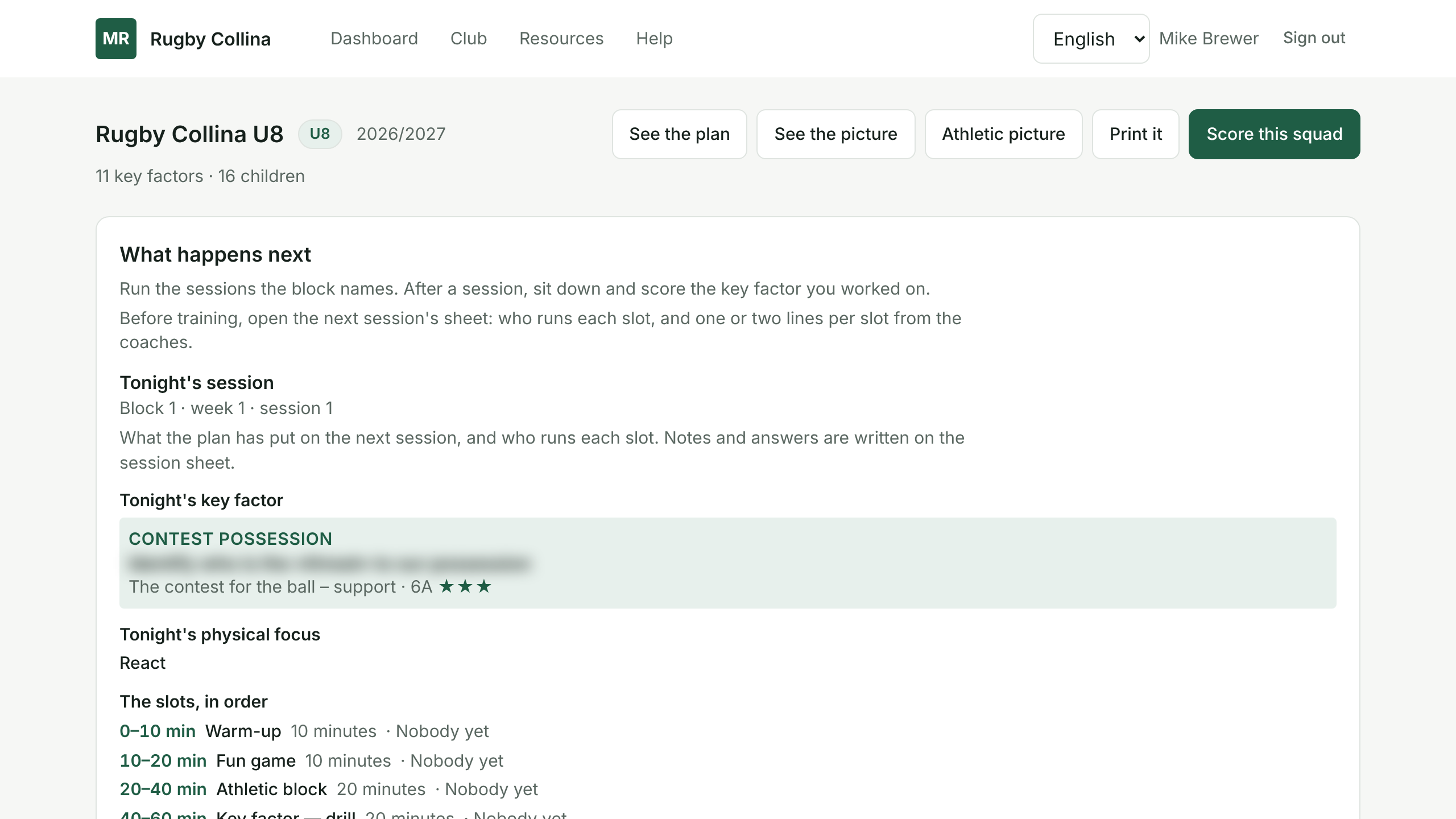
“Tonight’s session” on a squad page. -
Every session follows from the plan
The session sheet carries tonight’s key factor. Every coach on the squad writes their part; the athletic preparation coach writes the athletic block. What the session looks like is the coaches’ own.
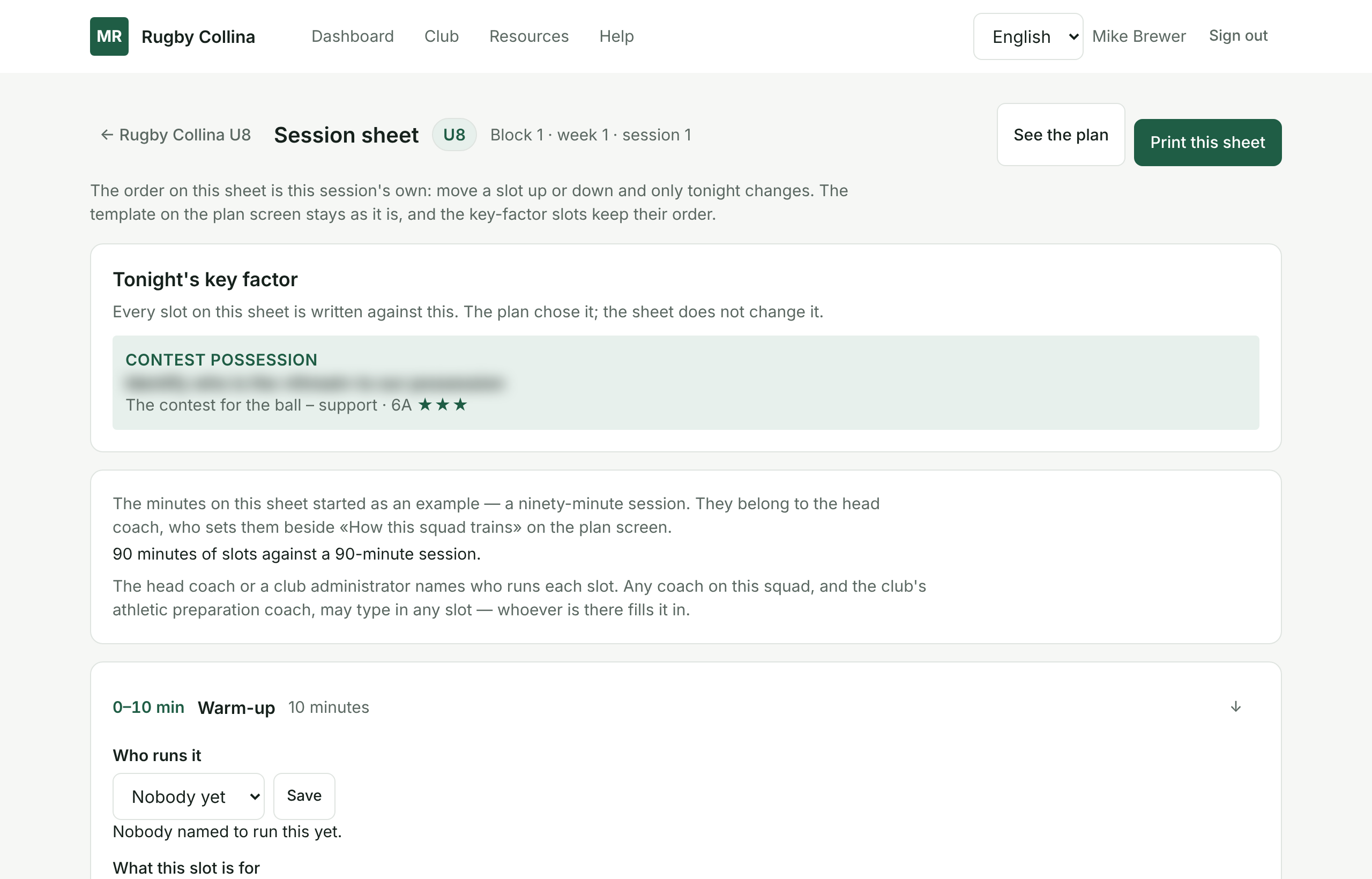
The session sheet. -
After the session, the scores
The head coach, seated afterwards and from memory, scores the key factor across the whole squad. The athletic preparation coach scores the physical skills. The squad picture appears.
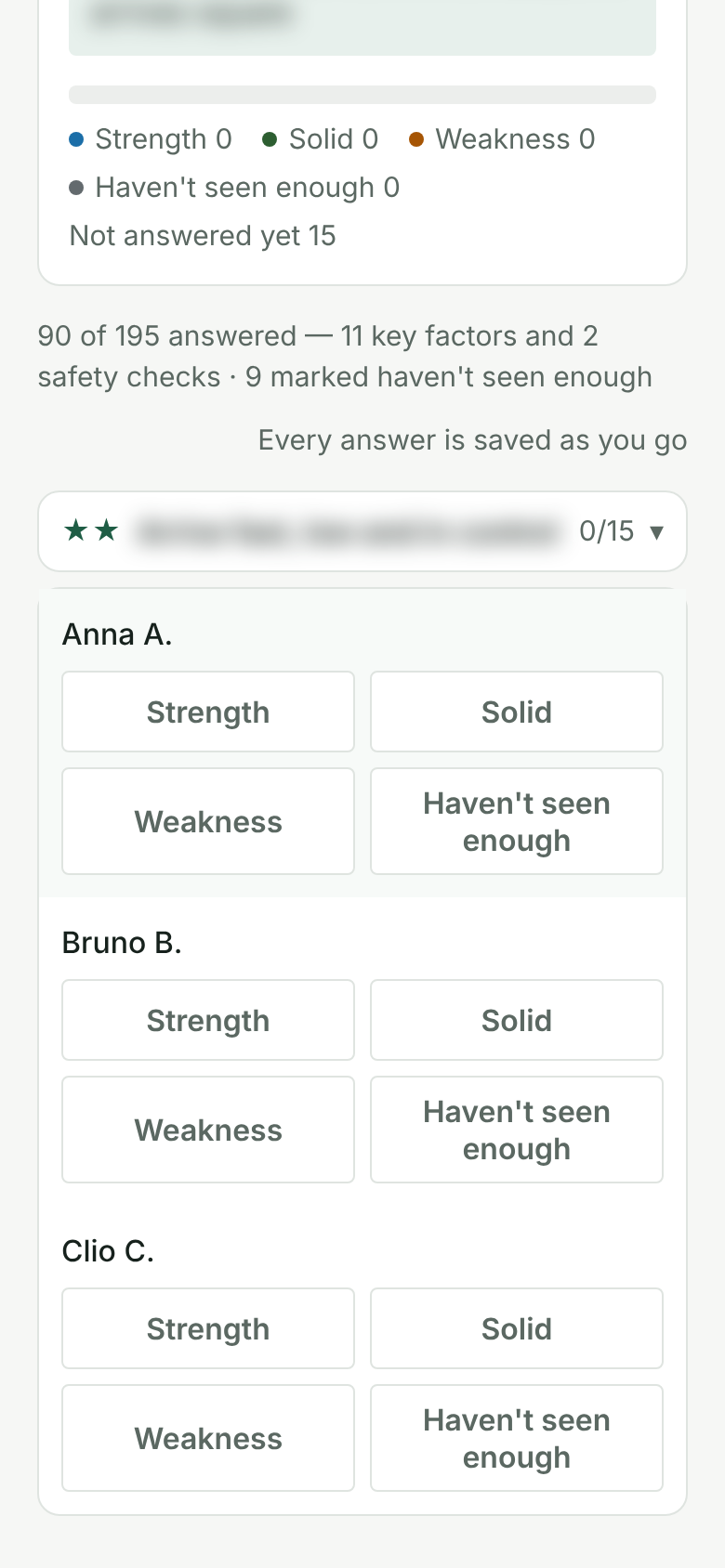
Scoring, on a phone.
Then the squad picture
How many key factors have been judged, the two safety checks, and each part of the game against the 80% line. Every coach on the squad reads it; the plan takes its next step from it.
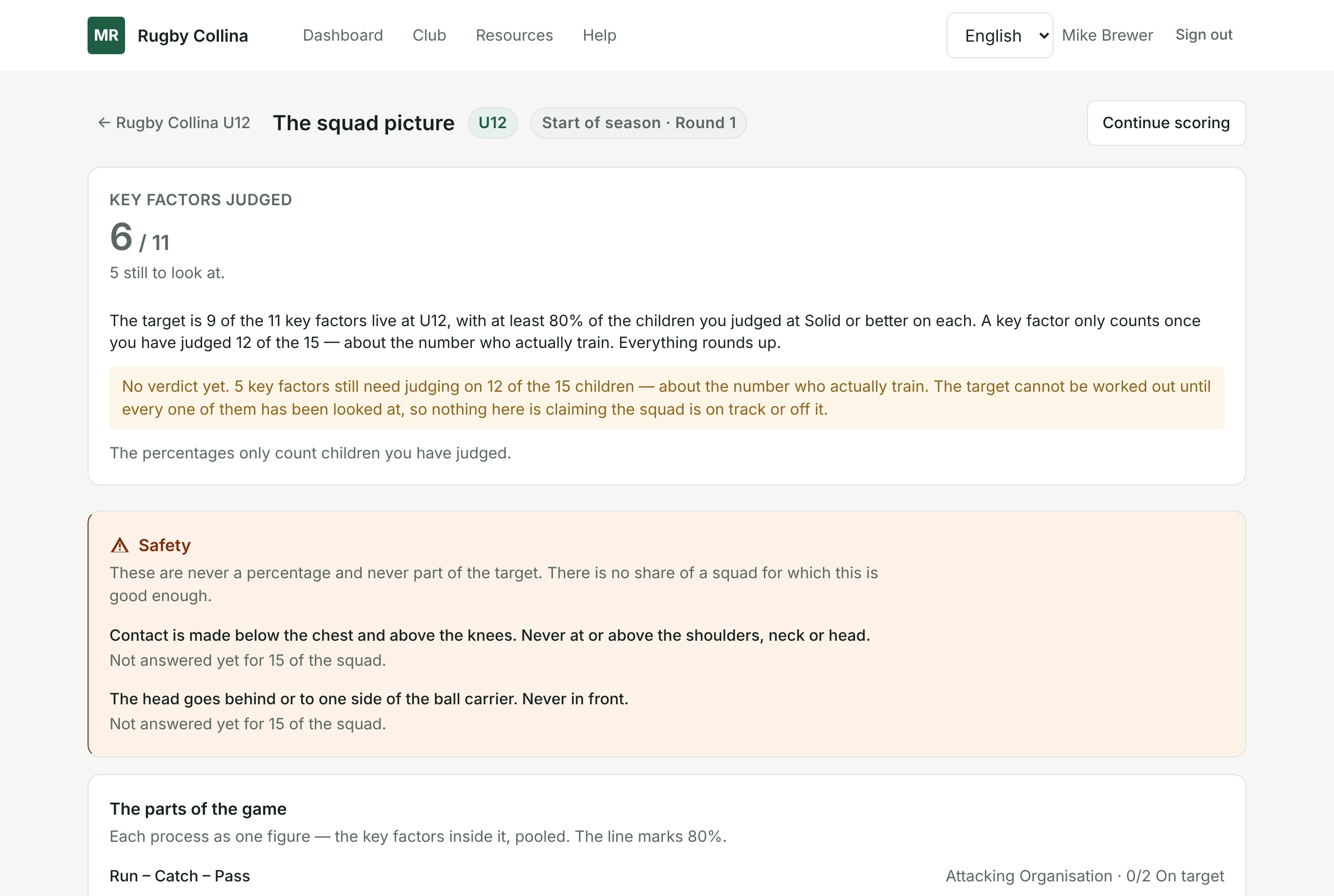
Screens from the try-it copy: an invented club with invented children. The wording of a key factor is blurred; that is behind the login.
The rule
The plan keeps the next session on the same part of the game and the same key factor until 80% of the squad is Solid or better on it, then moves on. If the squad is not there after four sessions it moves on anyway, and that key factor comes round again. Nobody decides when to move: the scores decide.
A season works toward one target: 80% of the squad at Solid or better across 80% of what is live at their age band.
The four answers
- Strength
- Solid
- Weakness
- Haven’t seen enough
One key factor at a time, across the whole squad. “Haven’t seen enough” is an answer, not a gap.
The framework, in one breath
- Four processes
- Run – Catch – Pass · Ball Carrier + Evasion · The contest for the ball – support · Tackle + Defence.
- Eleven key factors
- The list never changes with age. What changes is how much of each process surrounds them.
- Two safety checks
- Tackle height and head position. Scored, never a percentage. Any child at Weakness is named to the coach that week.
- Age bands U4 to U12
- Every age grade from U4 to U12, matching each union’s grades. Three rounds a season: start, middle, end.
Coaches cannot change the framework, and the wording of the key factors is behind the login on purpose.
Who does what
- Club administrator
- Sets up the squads, pastes the registers, invites the coaches, names one head coach per squad.
- Head coach
- One per squad. Saves the plan and is the only person who scores.
- Coach
- Reads everything — the picture, the groups, the plan — and writes on the session sheet.
- Athletic preparation coach
- Belongs to the club, reads every squad, scores the physical skills.
The line we hold
Mini Rugby Semplice never gives the drill or the session. The coach designs the game.
Read it in the platform’s own words
The same page a coach sees after signing in.
Try it with a test club
Your test club arrives already set up: one squad per age band with invented children, a plan saved and a round in progress. Wiped after 30 days. Never type a real child’s name here.